

The exterior of a vehicle features numerous components of various shapes, sizes, and functions. Some are easily noticeable, while others are integrated into the overall design to contribute to the vehicle’s functionality or appearance. How they are designed and installed depends on the requirements of each application.
For certain elements, the fastening solution may also include adhesive materials. When these need to be converted into custom components, their shape and dimensions are determined based on the area in which they will be used. Contours, cutouts, or other geometric features may thus become relevant in the conversion process.
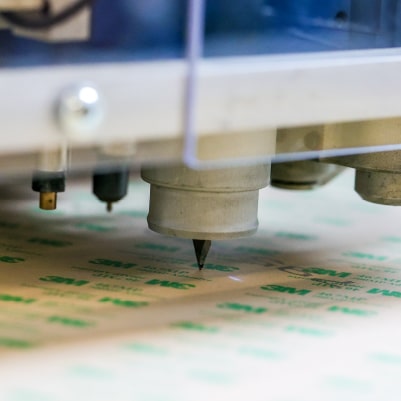
For projects like these, our team processes tapes and other flexible materials using various conversion processes. The choice of process and material is based on the specific requirements of the component and the application.
The shape must be adapted to the component
The shape of a technical part intended for an exterior component can be determined based on the geometry of the area where it will be installed. A part with a simple outline may have different requirements than one that includes multiple changes in direction, cutouts, or narrow sections. For this reason, the final configuration is closely tied to the specifics of the application.
The relationship between the different areas of the part is also important. A hole, an edge, or a section that must remain unobstructed can alter the geometry of the adhesive material. The technical drawing can provide clear guidelines for manufacturing the component in the configuration specified by the design.
Depending on the application, the geometry may include elements that require special attention during the machining stage:
- Irregular contours that must be reproduced according to the shape defined in the design
- Cutouts in interior areas, necessary when certain sections should not be covered
- Narrow sections where the available space for material is limited
- Areas of different sizes, when the width of the part varies along its contour
- Asymmetrically positioned elements, when the shape of the part is not identical on both sides
The positioning is designed for the application area
The shape of the component is just one of the factors that can be taken into account. The location of the component on the outer element is also important. The material may need to conform to certain edges, avoid specific areas, or be oriented in a certain way before application.
This relationship becomes particularly relevant when the exterior component has a specific geometry. A curved surface, a difference in elevation, or proximity to other elements can alter the design requirements. The solution can thus be adapted to the actual configuration of the area where it will be used.
Before the final version is finalized, several issues directly related to the integration of the piece can be clarified:
- How the component will be implemented
- Areas that must remain uncovered
- Access available at the time of application
- How the part will be handled before positioning
- Relationship with other components in the same area
The material must be suitable for outdoor use
A component installed outdoors may be subjected to conditions that differ from those of an application located in a protected space. Depending on the project, factors such as temperature fluctuations, humidity, contact with water, exposure to UV radiation, or other environmental factors may be relevant. The choice of material may take into account the specific conditions of the application.
The surface to which the adhesive will be applied is another important factor. Plastics, metals, painted surfaces, and other substrates may have different characteristics. For this reason, when selecting an adhesive solution, the shape of the component, the surfaces involved, and the project requirements can all be important considerations.
The role of conversion must be distinguished from the properties of the material. Through the manufacturing process, strip or other material can be transformed into a component with the configuration specified for the project. However, resistance to certain environmental conditions depends on the characteristics of the selected material. When the customer is unsure which option is appropriate, MDE can recommend materials based on the application and provide samples for testing.
Precision starts with the application's requirements
When it comes to exterior components, precision is not limited to adhering to specific dimensions. The adhesive part can also be analyzed in relation to the shape of the application area, the position it will occupy, and the characteristics of the material used. Each of these aspects may entail different requirements from one project to another.
A specialized converter can process materials supplied in rolls to produce parts with the shape and configuration specified in the design. For our company, this involves matching the geometry to the material and selecting the appropriate conversion process, based on the requirements of the specific application.

 EN
EN  RO
RO  DE
DE