
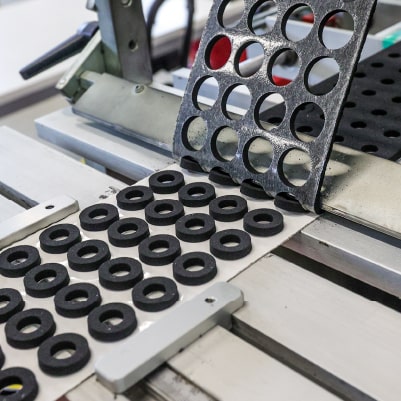
Adherence to tolerances is essential for the efficient operation of production processes. In many types of projects, even very small deviations can affect the stability of technical assemblies or the continuity of assembly steps. A high level of precision is particularly important in the automotive and electronics industries, as well as in many other competitive fields.
Maintaining precise dimensions depends not only on the quality of the materials used, but also on numerous other factors. In practice, this requires a combination of high-performance equipment, parameter control, and the implementation of rigorous quality control procedures. All of these factors help reduce variations and ensure consistent results.
Through conversion, advanced and customized solutions can be developed that integrate seamlessly into an assembly or product. In this process, adherence to tolerances is essential for the functionality of the final components.
The use of high-precision equipment
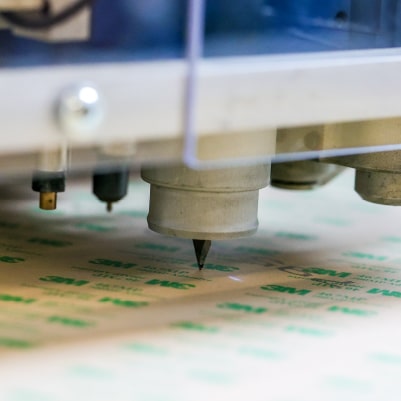
The processing of adhesive materials requires the use of highly precise equipment. This equipment ensures the accuracy of components and the stability of processing operations. Modern machines allow for the cutting or laminating of materials with very small tolerances. This helps ensure that the results meet the application’s requirements.
The equipment used can also help:
- Proper positioning of materials during processing
- Optimizing repetitive processes
- Ensuring predictable production
As specialized converters, we use state-of-the-art technologies to produce components tailored to complex applications and requirements. At the same time, this technology enables us to ensure consistency across batches and the stability of the final assembly.
In addition to the high level of precision they offer, high-performance machines can also help streamline workflows. Well-controlled processes help reduce material waste and minimize manual adjustments that can slow down production.
Maintaining a constant tension in the material
The behavior of an adhesive material can affect the stability and quality of the final result. Changes that may occur during winding, slitting, or lamination can affect how easily and consistently the components are subsequently integrated into a process. For this reason, careful monitoring of the parameters is necessary.
Here's what can happen if blood pressure isn't properly controlled:
- Deformations occur
- The material is subject to uneven stretching
- Air bubbles form or the layers separate
- The cuts are incomplete
Specialists often aim to ensure consistent material processing, reduce the risk of deformation, and prevent incomplete cuts or tears. At the same time, they strive to maintain proper positioning throughout the machining process and minimize the need for additional adjustments.
In many cases, voltage control is just as important as the precision of the equipment used. Proper management of these parameters contributes to more efficient processes and reliable adhesive parts tailored to the requirements of each application.
Implementation of strict control procedures
No matter how modern or precise the machinery is, or how high-quality the raw materials are, the performance of an adhesive solution also depends on constant checks and monitoring. Ensuring compliance with tolerances requires careful monitoring of every stage of the process. Quality control plays an essential role in ensuring proper production, especially in situations where even very small variations can affect integration and long-term functionality.
Control procedures are implemented across multiple stages to quickly identify any nonconformities or dimensional deviations. The accuracy of cutting, the positioning of raw materials, consistency between batches, component stability, and many other aspects are monitored. These checks are important because they help specialists maintain a high level of precision and reduce the risk of potential problems arising.
Constant monitoring of parameters and component characteristics allows for a clear assessment of material behavior. This is particularly essential in industrial projects, where continuous optimization and compliance with strict standards are fundamental requirements.
High-performance processes require carefully controlled solutions
In many industries, precision and consistency have a significant impact on operational efficiency. Companies often face difficult challenges or undertake projects with very specific requirements, which means they also need tailored technical solutions. In addition, many of them are paying increasing attention to controlling process parameters and organizing production stages.
Conversion involves the use of advanced equipment, precise material management, and rigorous quality control. All of these factors enable the development of functional parts that can successfully fulfill their role within an assembly. The ability of converters to develop such solutions is a key factor in the performance and reliability of modern production.


 EN
EN  RO
RO  DE
DE