
Thinsulate 3M transformed the automotive industry and car manufacturers choose this material to enhance passenger comfort, reduce noise, and improve thermal efficiency. Unlike many other traditional insulation materials, this one is very lightweight and moisture resistant.
When they think about this material, many people probably picture winter jackets and gloves to keep them warm in freezing temperatures. But little did they know that this innovative material also helps automakers create comfortable and quieter vehicles.
The definition of Thinsulate
If you’ve ever asked yourself what is 3M Thinsulate, it’s actually a pretty impressive material. Simply put, it’s a synthetic insulation layer made from fine polyester and polypropylene fibers. At first, it was used for cold weather clothing and accessories, but engineers discovered its effectiveness in many other areas.
This insulation layer is different than traditional ones. Usually, we see bulky layers of fabric to block heat and sound, but 3M revolutionized this concept. Therefore, Thinsulate insulation is made out of ultra-fine microfibers that makes it very lightweight and effective.
Characteristics of Thinsulate
Among the characteristics of this material, we can mention:
- Flexibility
- Sound absorption
- Thermal insulation
- Non-woven structure
This is a flexible component which can be easily shaped, cut, and installed without adding excessive weight on vehicles. It’s also great at regulating temperature and reducing noise levels inside vehicles. If you need personalized solutions for your car company, MDE Converting can help you regardless of complexity or needs.
The advantages of 3M Acoustic Thinsulate
Engineers and workers are constantly looking for ways to improve the driving experience for people. In this context, 3M Thinsulate plays an important role in achieving the set goals. But why is this material such a good choice? Let’s take a look at its advantages:
- Efficient acoustic absorption
- Easy to install and assemble
- Lightweight performance
- Durability
- Moisture resistant
Thinsulate is great at blocking unwanted sound from the engine, wind, and road. It creates a relaxing ride experience for drivers and passengers. Moreover, it’s very lightweight and ensures fuel efficiency and electric vehicle range.
An important reason for its usage is that it’s very easy to install and assemble compared to fiberglass, shoddy, felt, or PET. Our company uses a variety of attachment methods depending on specific needs. 3M Acoustic Thinsulate remains effective even in humid environments and prevents the risks of mold and offensive odors.
The application of Thinsulate in vehicles
This component can be easy to shape, cut, and install in many parts of a vehicle. Whether you’re looking to reduce noise or enhance temperature control, it offers a simple way to enhance comfort. Here are some of the most common areas:
| Areas | Usage |
| Floor and pillars | Controls the temperature and noise throughout the vehicle |
| Door panels | Blocks the noise from traffic and wind for a quieter cabin |
| Wheel wells | Reduces road noise and vibrations to improve passenger comfort |
| Roof panels | Reduces sound from wind, rain, and environmental vibrations |
| Firewalls | Dampens engine noise and improves heat insulation |
Thinsulate 3M is great for insulating the floor and pillars, door panels, wheel wells, roof panels, and firewalls. It helps keep the vehicle at a comfortable temperature while reducing unpleasant noise for a more enjoyable ride.
Roof insulation helps block the sound from different environmental factors, keeping the cabin quiet no matter the weather. With that being said, this material increases both comfort and quietness inside the vehicle, making the drive more enjoyable for both the driver and passengers.
MDE Converting: your partner for Thinsulate solutions
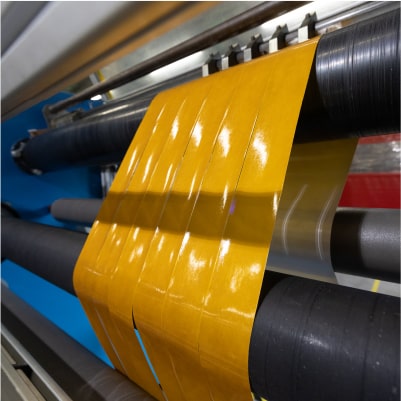
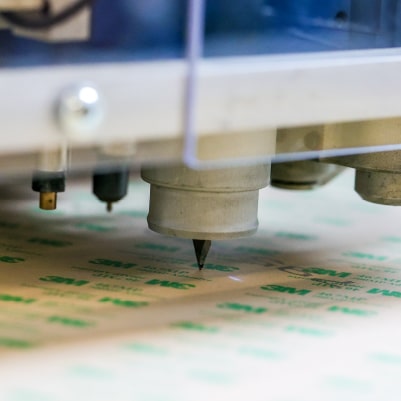
We know how effective this insulation solution can be for many applications. Therefore, we provide personalized products that ensure maximum performance. Our expertise in precision cutting and shaping allows automotive manufacturers to save time and reduce material waste during their industrial operations.
If you’re looking for advanced, lightweight materials to block sound and ensure superior comfort for any vehicle, this is the right choice. We develop a custom-cut solution that will perfectly fit in the right areas without any effort for installation. We can convert this material for door panels, wheel wells, roofs, and many more applications.
This component has become a game-changer in the automotive industry. Its properties makes it a great choice for reducing engine sounds, controlling temperature, and keeping the cabin comfortable for any ride. It will undoubtedly remain one of the best options for engineers and car manufacturers. If you want to benefit from all the advantages of this material, partner with MDE Converting and we’ll develop the perfect solution for your business.
FAQs:
What is 3M Acoustic Thinsulate used for?
3M Acoustic Thinsulate is commonly used to help make the cabin of a vehicle quieter and more comfortable for drivers and passengers. Its purpose is to reduce the noise coming from the road, wind, and engine, while also helping maintain a stable temperature inside the car.
Is Thinsulate good for car sound insulation?
Yes. It works very well for reducing noise inside vehicles. It has a structure made out of very fine fibers that capture and slow down sound waves as they pass through the material. This process helps limit the amount of noise that reaches the cabin.
Is Thinsulate suitable for electric vehicles?
Yes. Thinsulate is a good option for electric vehicles, just like for many other ones. Electric motors are much quieter than traditional engines, so the tire noise, road vibration, and wind become sounds that are more noticeable. Therefore, this material helps manage various sounds and keep the interior of an electric car more comfortable.
Does Thinsulate maintain its performance over time?
Yes. It’s designed to last as long as the vehicle is able to last. The synthetic fibers keep their structure even when exposed to constant vibrations, temperature changes, and regular use. This allows the material to continue providing reliable insulation over many years.
Does 3M Acoustic Thinsulate affect vehicle safety standards?
No. Materials used in vehicles must meet strict safety requirements, and this one is designed to comply with these standards. It’s engineered to meet automotive regulations related to safety, durability, and performance. This allows automakers to use it in vehicle interiors without affecting compliance.
Can 3M Thinsulate be combined with other insulation materials?
Yes. It can be combined with other insulation materials. However, during this process it’s important to avoid compressing Thinsulate because this could reduce its performance. Also, it’s important to add vapor barriers where needed and maintain airflow when required. Another essential aspect is to use appropriate adhesives or mechanical fastening.
Is it compatible with automated manufacturing processes?
Yes. Thinsulate can be processed using several industrial techniques such as cutting, shaping, and lamination. This makes it easy to produce components that fit accurately into different vehicle structures. The material can be integrated efficiently into large-scale production.
Is it suitable for both passenger and commercial vehicles?
Yes. This material can be used in many types of vehicles, including passenger cars, vans, trucks, and commercial fleets. It’s a very popular choice for van conversions, because it has high insulation performance, moisture resistance, and it’s easy to install. Whether in passenger or commercial vehicles, it can keep drivers comfortable on long rides in terms of noise and temperature.

 EN
EN  RO
RO  DE
DE