
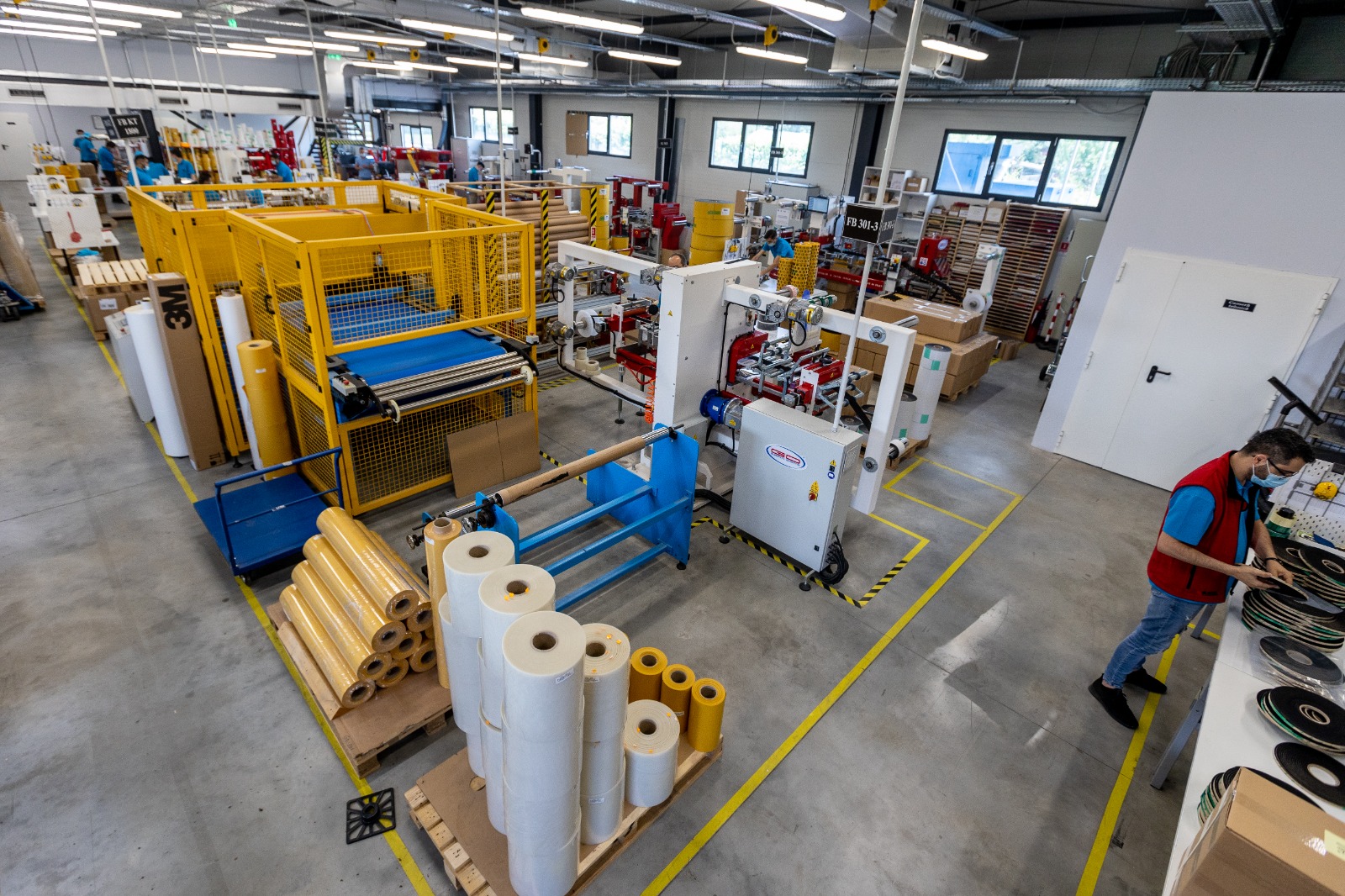
When designing and developing products, regardless of their nature and purpose, specialists take into account numerous requirements, standards, and specifications. Products need specific dimensions, shapes, design features, functionality, and much more. Such aspects are also taken into account in the development of customized adhesive components.
In our field, it is important to adhere to tolerances regardless of the project or application. They show how much a part can vary without causing problems. They also influence how well it fits into an assembly, how easy it is to apply, and how well it holds up over time.
As is the case with other operations carried out by companies, problems can arise on production or assembly lines. At MDE, we analyze every critical aspect of a project in detail, precisely so that we can solve existing problems and avoid others.
Proper fit from the first application
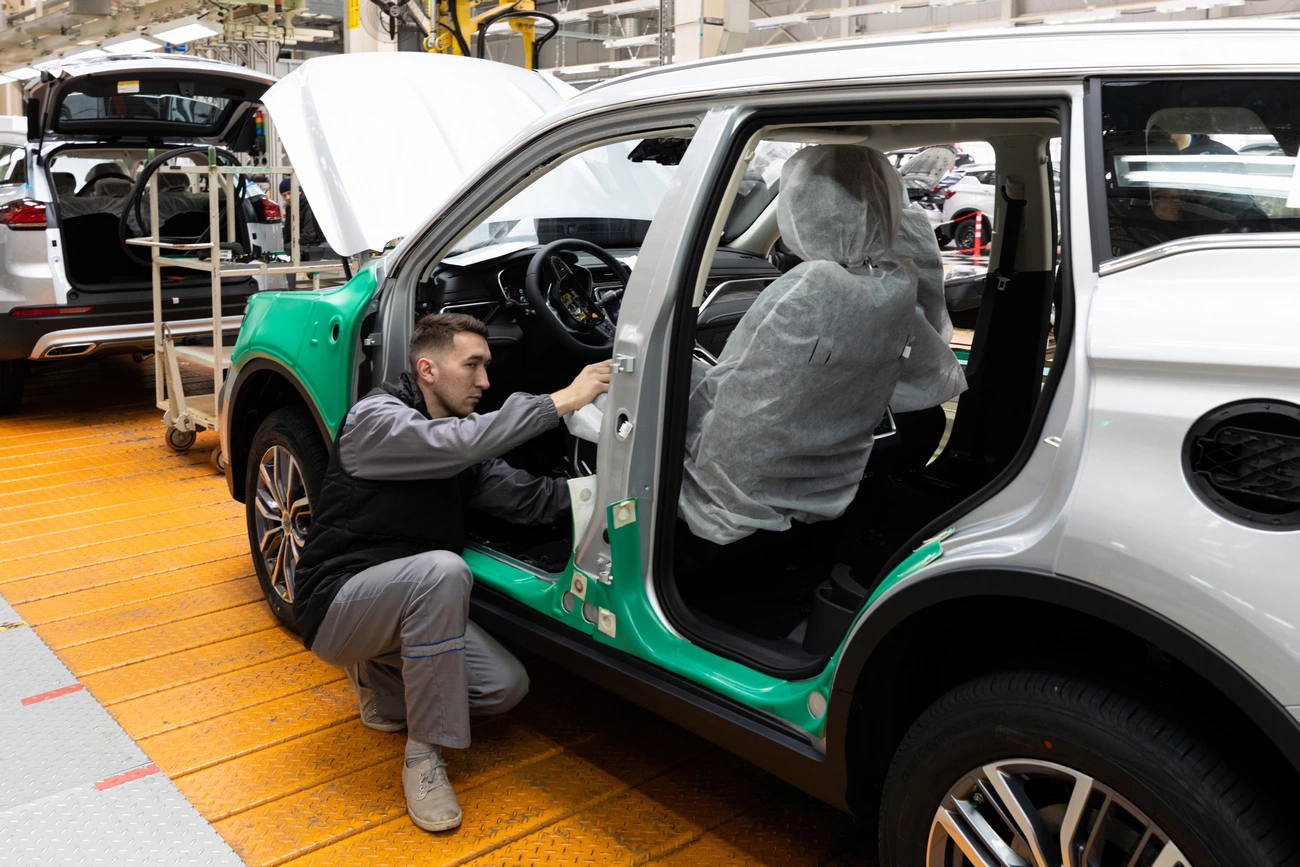
A company may seek the help of specialists and invest in custom adhesive components for a number of reasons. Some need to solve the problem of vibrations and loud noises in vehicles, if we are talking about the automotive sector. It may also be a company looking for solutions to protect certain elements of household appliances.
There are numerous situations in which technical solutions resulting from conversion prove to be a real help. What matters most in this process is the correct fit of the component as a whole. If it does not meet the required dimensions, it may subsequently require adjustments that are time-consuming and slow down the workflow.
Every industry has its own requirements, needs, and expectations. It faces various problems over time, which it naturally wants to solve in the most efficient way possible. The right solution may be one that is perfectly suited to the situation at hand and, in particular, adapted to tolerances.
The approach we use to obtain the right part contributes to:
- Easy integration into existing assemblies
- Reduced installation time
- Elimination of adjustments made directly on the line
- Maintaining a predictable workflow
Thickness and shape control for consistent results
Thickness is one of the critical factors in many types of applications. Even small differences can affect positioning, pressure exerted during assembly, or the final appearance of the product. At the same time, the shape of the component is also very important. It often needs to follow specific contours or geometries.
Conversion allows these aspects to be carefully controlled. Appropriate cutting technologies and constant parameter checks help to ensure that the same characteristics are maintained from one batch to the next. For manufacturers, consistency is essential, and it is even more important that it is of a high standard.
Specifically, good control of these basic elements allows:
- Correct alignment
- Uniform application
- Consistent behavior
- Reducing variations
Operators do not have to compensate for differences, assembly can be carried out efficiently and without difficulty, and the quality of the final product does not suffer. All of this is essential, especially in series production and industrial operations where any deviation means losses.
Repeatability and stability in processes
Process stability is just as important as speed or volume, for example. Processes must be repeatable under the same conditions regardless of changes in working methods or increases in production. Any uncontrolled variation could lead to material waste, blockages, and quality deterioration, affecting operational efficiency.
A component that complies with all specifications and tolerances behaves predictably. Dimensions, positioning, cut quality, and any other existing aspects are kept within well-defined limits. This greatly helps to eliminate variations from the early stages of the process.
By ensuring that tolerances are respected, processes become easier to control. Losses are also kept under control and even minimized. Planning can also be done more efficiently, with greater clarity and confidence. A technical solution developed with great attention to detail and using advanced methods contributes to the stability and predictability of operations.
Quality and performance are based on precision
At MDE, precision is treated as a real responsibility towards our partners. Careful analysis of the project, understanding the requirements and challenges, and strict adherence to tolerances allow us to transform an adhesive material into an innovative solution.
The goal, in itself, is not just to create a part. What we are aiming for is to make improvements where they are needed and to support a controlled way of working. Small differences can have big consequences, and precision can become a competitive advantage for many modern industries.



 EN
EN  RO
RO  DE
DE