
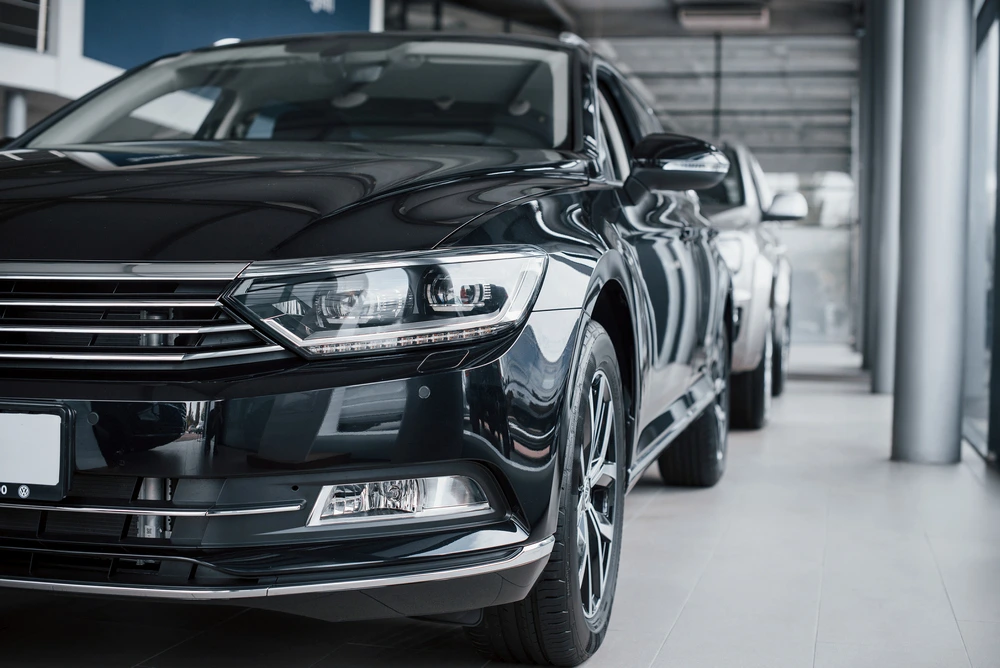
Whether we're talking about a conventional car, an electric car, or another type of vehicle, they all share roughly the same evaluation and selection criteria, with a few exceptions. One of the most important criteria is undoubtedly the level of interior comfort. Consumers don't choose their cars based solely on performance or fuel efficiency, but also on the driving experience.
There are several factors that determine how comfortable the interior environment is. On the one hand, it’s about the quality of the installation and the components; on the other hand, it’s about materials, design, and other factors. It’s common for noise or vibrations to be caused not necessarily by defects, but by the type of joints and how they were constructed.
For automotive manufacturers, improving comfort is a key objective. For both drivers and passengers, this is a factor that enhances their experience with the vehicle and builds trust in the company that produced it.
Reducing noise and vibration in the passenger compartment
A comfortable car is designed in a certain way, features high-quality upholstery, and has a stable assembly of properly integrated components. However, in addition to these features, certain vibrations and noises may occur during use. Some can be ignored because they are not bothersome, while others may cause discomfort.
Mitigating these effects is a goal we aim to achieve in automotive applications that involve such requirements. Certain adhesive materials can absorb some of the mechanical stresses that transmit vibrations to interior areas.
The material is not used in a standard form, as each space has different characteristics in terms of shape, dimensions, geometry, and so on. As a result, it must be processed in a customized manner using an appropriate conversion method.
The solutions obtained can be used in situations such as:
- Areas where two components come into contact
- Joints where slight positional variations occur during use
- Elements that must be stabilized without using additional mechanical systems
- Areas where it is necessary to compensate for differences in surface area
Integrating design and functionality
The automotive industry has evolved significantly, leading to the development of vehicles in which design and functionality are closely intertwined. Every component is engineered to perform effectively in terms of both design and safety and performance.
In interior applications, many components must be installed in such a way that they fulfill a specific function without affecting other elements of the assembly or the final appearance. In this context, customized adhesive solutions can be successfully employed. Joints can be created that do not require visible mechanical fasteners and that allow for an even distribution of stress between components and surfaces.
This approach allows for:
- Maintaining the position of parts during and after assembly
- Adaptation to different geometries, including highly complex shapes
- Reducing the need for adjustments during the assembly process
- Integrating components discreetly, without affecting the design
Protecting critical vehicle components
Advanced materials used in conversion processes can possess essential properties that go beyond simple fastening. The fact that they can serve other purposes is particularly relevant for parts that need to be protected for various reasons.
The electronics in a car can be exposed to temperature fluctuations, dust, and vibrations. Custom adhesive solutions can be used to enhance protection against these factors. They can also be used to secure screens and other components, as well as to prevent damage to surfaces during production or transport.
Another key consideration here is the use of materials with low emissions of volatile organic compounds. These emissions can affect the air quality inside the vehicle. For this reason, special attention is paid to this aspect, and solutions are designed to meet specific industry requirements.
An essential requirement for manufacturers and drivers
Through our work, we position ourselves as a valuable partner for companies in the automotive sector that aim to produce high-performance yet comfortable vehicles. By carefully selecting materials and machining them into highly precise parts, we develop solutions that integrate seamlessly and perform reliably under specific conditions.
When it comes to comfort, the difference lies not only in the visible elements, but also in how each of them performs its function consistently. This result is made possible by specialized expertise, the right cutting technology, and technical innovations planned and designed by specialists.

 EN
EN  RO
RO  DE
DE